

What the Research Says About Omega 3s and Brain Resilience
5 Science-Backed Strategies to Help Preserve Memory, Focus, and Mental Clarity
By Carol Locke, M.D.
By age 70, the average brain shrinks by nearly 10%, according to research from the Buck Institute and UCSF.1 Even before that, subtle changes in memory, focus, or mental energy often begin decades earlier—sometimes without us realizing it. While genetics play a role, much of how the brain ages is shaped by daily choices—including what we feed it.
Among the most critical—and most overlooked—nutrients for lifelong cognitive health are omega 3 fatty acids, particularly EPA and DHA. These two long-chain fats don’t just influence how we feel—they help build and preserve the very structure of the brain itself.
Recent clinical research has shown that targeted omega-3 interventions can even improve specific issues like memory problems linked to loneliness—a subtle but increasingly important risk factor for cognitive decline.
In this newsletter, I’ll explore how EPA and DHA support memory, focus, and brain volume over time—backed by research and grounded in biology.
And I’ll share five practical, research-backed strategies you can apply daily to support long-term brain health.
Why the Brain Depends on Omega 3s
A review by the University of Chile and the University of Toronto found that DHA makes up as much as 10-20% or more of total fatty acids in key brain regions.2 It’s especially concentrated in regions responsible for memory and learning, such as the hippocampus, as shown by research published in the British Journal of Nutrition.3
EPA, meanwhile, plays a complementary role—supporting mood and neuroplasticity, the brain’s ability to adapt, grow, and form new connections, while reducing neuroinflammation and promoting cognitive resilience under stress.
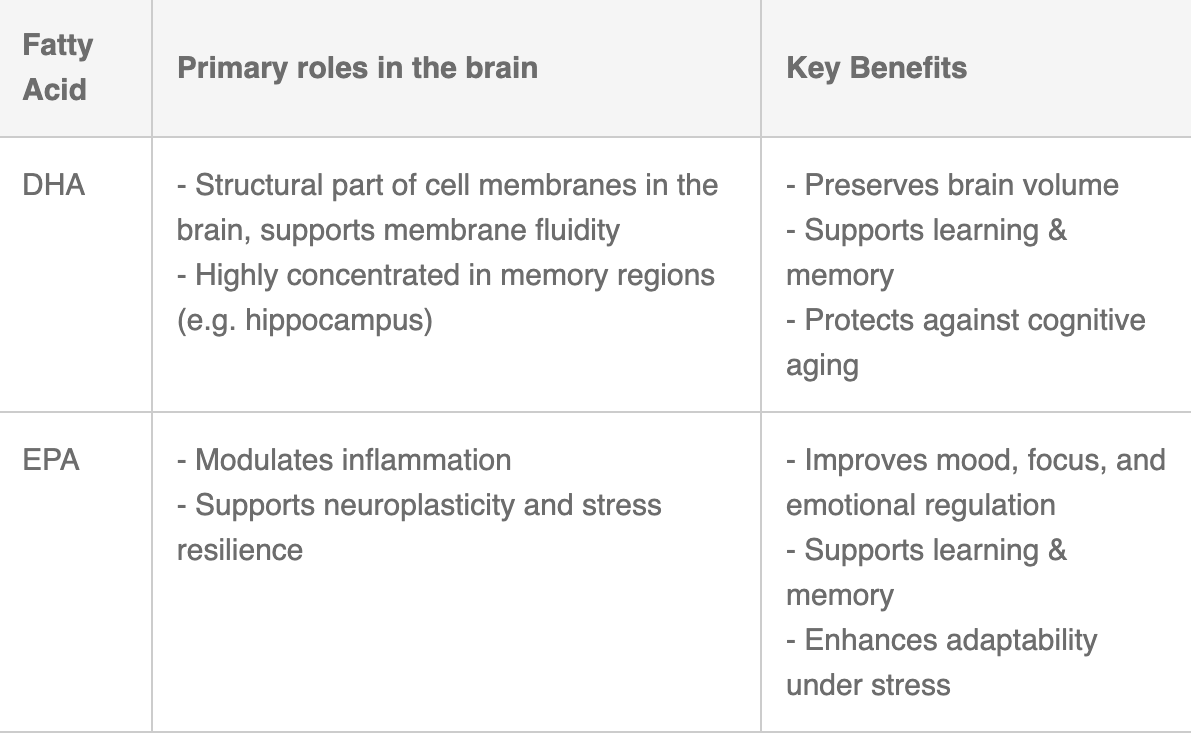
Together, EPA and DHA:
• Maintain the fluidity of neuronal membranes, essential for communication between brain cells
• Support synaptic plasticity, the foundation for learning and memory
• Help regulate inflammation, a key driver of cognitive decline and brain aging
Both DHA and EPA, the primary omega-3 fatty acids found in the brain, have been shown to increase levels of brain-derived neurotrophic factor (BDNF)—a key protein involved in neuroplasticity, learning, and memory. This effect is supported by both animal and human studies, and is one of the ways omega-3s help protect and enhance cognitive function as we age.4,5
Low levels of omega 3s have been associated with accelerated brain atrophy, poor cognitive test performance, and even reductions in total brain volume on imaging studies.
What the Science Reveals About Omega 3s and the Brain
Mounting evidence from both observational and interventional studies continues to underscore the connection between omega 3s and long-term brain health:
• Memory & Learning: Individuals with higher blood levels of omega 3s tend to perform better on memory and executive function tasks.
A study from Ohio State University even found that omega-3 supplementation improved memory problems linked to loneliness—a growing, underrecognized risk factor for cognitive decline.6
(That trial used the OmegaBrite 7010MD advanced formulation.)
• Structural Brain Changes: MRI studies have shown that higher DHA intake correlates with greater brain volume and slower loss of white matter.
• Mood & Focus: EPA has been studied for its ability to reduce anxiety, support emotional regulation, and improve attention—especially under cognitive stress.
These findings suggest that omega 3 status is not just a marker of good health—but a driver of cognitive preservation over time.
So how can we translate these insights into habits that support the brain every day?
5 Daily Strategies to Protect Your Brain
So how do you put this into practice? While there’s no single formula for protecting cognitive health, these science-based strategies offer a strong foundation:
1. Prioritize Omega 3 Intake
Aim for 1000–2000+ mg of combined EPA and DHA daily, through diet and/or supplements.
These long-chain omega-3s supports brain cell membrane integrity, signaling, and repair mechanisms—foundational processes for protecting memory and cognition over time.
Even healthy young adults can feel less anxious and more resilient with omega-3s. In a randomized study at Ohio State University, medical students who took OmegaBrite 7010MD’s formula for 12 weeks saw a roughly 20% reduction in anxiety compared to those taking a placebo.7 It also helped reduce markers of inflammation, a physiological factor linked to how we handle stress. These findings suggest that omega-3s may help support calm, focus, and stress regulation—even during demanding times.
And if supplementing, be mindful of the specific formulation—not all omega-3 supplements are created equal—the ratio, concentration, and form of EPA and DHA all influence biological effects. This study was done on OmegaBrite 7010MD’s advanced formula but these outcomes have not been demonstrated in studies using standard fish oil products.
2. Adopt a Mediterranean-Inspired Diet
A landmark randomized controlled study published in JAMA Internal Medicine in 2015 followed nearly 500 older adults for over four years.8 It found that a Mediterranean diet—supplemented with either extra virgin olive oil or mixed nuts—significantly slowed cognitive aging compared to a low-fat control diet.
Participants on the Mediterranean diet preserved cognitive function, specifically memory (with nuts—walnuts, hazelnuts, and almonds) and executive function (with olive oil), while those on the control diet experienced significant decline—effectively demonstrating a dietary approach to protecting brain function with age.
To start, aim to include fatty fish in meals often (like salmon or sardines), replace seed oils with extra virgin olive oil, enjoy a daily handful of nuts, and make leafy greens and berries a daily staple.
3. Limit Trans Fats and Ultra-Processed Oils
Industrial fats compete with DHA in the brain’s fatty acid composition and may interfere with healthy cell signaling. Avoid processed foods like fried fast food, non-dairy creamers, and packaged cookies, and check ingredient labels when buying. Look for terms like “partially hydrogenated oils,” “hydrogenated vegetable oil,” or vague “vegetable oil blends.” When cooking at home, opt for olive oil or avocado oil instead of vegetable oil blends.
4. Support Neuroplasticity with Good Sleep and Lifelong Learning
Prioritize consistent, high-quality sleep—it’s when the brain consolidates memories, clears metabolic waste, and reinforces neural circuits. Adults who sleep poorly show faster cognitive decline and reduced memory performance over time.
In addition to sleep, engage your brain daily with activities that challenge and stimulate—reading, learning new skills, or meaningful conversations all help strengthen neural pathways and support long-term resilience. A major study of over 180,000 adults found that those who regularly engaged in learning new skills or ideas had sharper thinking and a 21% lower risk of dementia within five years—regardless of genetics or baseline cognition.9
To put these into practice, try setting a regular bedtime, limiting screen exposure before sleep, and scheduling time for mentally engaging activities—even 20 minutes a day makes a difference.
5. Build Brain Resilience Through Physical Activity
Regular physical activity is one of our most effective tools for protecting brain health. Aerobic exercises—like brisk walking, cycling, swimming, or dancing—increase blood flow to the brain, deliver essential nutrients, and stimulate the release of BDNF (brain-derived neurotrophic factor).
People who stay active tend to have larger brain volumes, stronger memory, and slower cognitive decline as they age. According to research cited by Harvard, participants in one study improved memory by walking briskly for one hour, twice a week—just 120 minutes weekly of moderate activity.10 Standard health recommendations advise 150 minutes of moderate aerobic activity per week, or about 30 minutes most days.
If that feels out of reach, start small. Begin with short walks and gradually add 5 to 10 minutes each week. What matters most is making movement a regular part of your routine
Key Takeaway: Brain Health Is Structural, Not Just Mental
Cognitive resilience is something we can nourish and strengthen throughout life.
Mental clarity and brain health aren’t just about how we feel—they reflect the physical state of our brain cells, the health of our connections, and the nutrients and daily habits that sustain them.
Omega-3 fatty acids play a foundational role in supporting both the structure and function of the brain. Alongside a thoughtful lifestyle—built on healthy food, quality sleep, regular movement, and mental stimulation—they form one of the most evidence-based strategies we have for protecting long-term cognitive vitality.
Try choosing one strategy to begin with—and build from there.
Small, daily choices can strengthen your brain for today—and for years to come.
In health,
Dr.Locke

References:
1. Markov N, Lindbergh C, Staffaroni A, Perez K, Stevens M, Nguyen K, et al. Age-related brain atrophy is not a homogenous process: Different functional brain networks associate differentially with aging and blood factors. Proceedings of the National Academy of Sciences of the United States of America. 2022 Dec;119(49):e2207181119.
2. Sambra V, Echeverria F, Valenzuela A, Chouinard-Watkins R, Valenzuela R. Docosahexaenoic and arachidonic acids as neuroprotective nutrients throughout the life cycle. Nutrients. 2021 Mar;13(3):986.
3. Létondor A, Buaud B, Vaysse C, Fonseca L, Herrouin C, Servat B, et al. Erythrocyte DHA level as a biomarker of DHA status in specific brain regions of n-3 long-chain PUFA-supplemented aged rats. British Journal of Nutrition. 2014 Dec;112(11):1805–18.
4. Ziaei S, Mohammadi S, Hasani M, Morvaridi M, Belančić A, Daneshzad E, et al. A systematic review and meta-analysis of the omega-3 fatty acids effects on brain-derived neurotrophic factor (BDNF). Nutritional Neuroscience. 2023 Jul;27(7):715–25.
5. Sugasini D, Yalagala PCR, Subbaiah PV. Plasma BDNF is a more reliable biomarker than erythrocyte omega-3 index for the omega-3 fatty acid enrichment of brain. Scientific Reports. 2020 Jul;10(1):10809.
6. Jaremka L, Derry H, Bornstein R, Prakash R, Peng J, Belury M, et al. Omega-3 supplementation and loneliness-related memory problems: Secondary analyses of a randomized controlled trial. Psychosomatic Medicine. 2014 Oct;76(8):650–8.
7. Kiecolt-Glaser J, Belury M, Andridge R, Malarkey W, Glaser R. Omega-3 supplementation lowers inflammation and anxiety in medical students: A randomized controlled trial. Brain, Behavior, and Immunity. 2011 Nov;25(8):1725–34.
8. Valls-Pedret C, Sala-Vila A, Serra-Mir M, Corella D, de la Torre R, Martínez-González M, et al. Mediterranean diet and age-related cognitive decline: A randomized clinical trial. JAMA Internal Medicine. 2015 Jul;175(7):1094–103.
9. Takeuchi H, Kawashima R. Effects of adult education on cognitive function and risk of dementia in older adults: A longitudinal analysis. Frontiers in Aging Neuroscience. 2023;15:1212623.
10. Ten Brinke L, Bolandzadeh N, Nagamatsu L, Hsu C, Davis J, Miran-Khan K, et al. Aerobic exercise increases hippocampal volume in older women with probable mild cognitive impairment: A 6-month randomised controlled trial. British Journal of Sports Medicine. 2015 Feb;49(4):248–54.
Sleep Like a Pro – Your Guide to Better Rest Starts Here
Sleep Like a Pro – Your Guide to Better Rest Starts Here
Struggling to wake up refreshed, even after a full night’s sleep? You’re not alone—poor sleep quality can leave you drained, disrupt memory consolidation, and impair your brain’s glymphatic system, which clears toxins to keep your mind sharp. The good news? Science-backed strategies like morning sunlight, cutting blue light, and reducing inflammation with omega-3s can transform your sleep. Discover how to optimize your sleep stages and wake up energized with our five proven tips!
If you’ve ever woken up exhausted after a full night’s sleep, you’re not alone. Research shows that even 8 hours isn’t enough if your sleep quality is poor. While you sleep, your brain is hard at work—laying down new memories, consolidating learning, and clearing out debris and toxins via a process called glymphatic clearance. This nighttime detox system helps clear out metabolic waste, including beta-amyloid, a protein linked to neurodegenerative diseases. When sleep is disrupted by time changes, travel, or life’s stresses, so is this critical brain-cleansing process.
Disrupted sleep itself increases inflammation, creating a vicious cycle—poor sleep leads to more inflammation, which then makes it harder to get restorative sleep. Breaking this cycle is key to improving both sleep quality and overall health. The good news? Small changes can lead to big improvements. Let’s dive into understanding sleep and explore five science-backed strategies to help you sleep deeper and wake up feeling refreshed.
The Four Stages of Sleep
Every night, your body cycles through four sleep stages essential for recovery, brain health, and feeling refreshed. Light sleep (Stages 1 & 2) slows your heart rate and cools your body, while sleep spindles—brief bursts of brain activity—block distractions and boost memory consolidation for learning. Deep sleep (Stage 3) produces slow delta waves, releasing growth hormone for muscle repair and immune support, as the glymphatic system clears brain toxins to keep your mind sharp. REM sleep (Stage 4) ramps up brain activity, fuels dreaming, and strengthens emotional processing and memory. Together, these stages help you wake up ready to shine!
Interruptions to these stages—such as difficulty falling asleep, frequent waking, or not getting enough deep sleep—can affect mood, energy, and cognitive function the next day. So, what can you do to sleep better and improve this foundation of your health? Here are five science-backed strategies to enhance your sleep starting tonight, so you wake up full of energy and focus.
5 Science-Based Strategies for Better Sleep
1. Get Early Morning Sunlight
When sleep or wake times are disrupted by late nights, shift work, or travel, your circadian rhythm—which helps you fall asleep and stay alert—gets thrown off. Low-angle morning sunlight regulates this rhythm, boosting cortisol in the morning and suppressing melatonin until nighttime. Studies show that 20 minutes of morning sunlight helps you fall asleep faster and improves sleep efficiency.
Action Items:
- Spend at least 20 minutes outside in the morning, even on cloudy days.
- If outdoors isn’t an option, use a 10,000-lux light therapy box for 20 minutes to mimic daylight.
- Wake up at the same time daily and go to bed when you feel sleepy to anchor your sleep-wake cycle.
2. Cut Out Blue Light Before Bed
Evening blue light from screens blocks melatonin production, delaying sleep onset. One study found that two hours of blue light exposure before bed significantly suppressed melatonin, reducing sleep quality.
Action Items:
- Power down screens at least 60 minutes before bed.
- Opt for a book or audiobook instead of scrolling.
- If screens are unavoidable, use a blue light filter or wear blue-light-blocking glasses.
3. Optimize Your Sleep Environment: Keep It Cool and Dark
Your body temperature drops naturally to help you fall and stay asleep. A cool room (65-67°F) enhances deep, slow-wave sleep, crucial for memory consolidation, immune function, and glymphatic clearance.
Action Items:
- Lower your thermostat to 65-67°F an hour before bed.
- Dim lights in the evening and use blackout shades or a sleep mask to block light sources.
- Take a warm bath or shower 60 minutes before bed—cooling afterward triggers drowsiness.
4.Manage Caffeine and Alcohol Intake
Caffeine blocks adenosine receptors, delaying sleep and reducing deep sleep quality. A study found that caffeine six hours before bed cut total sleep time by up to an hour. Alcohol, while initially sedating, disrupts REM sleep, causing fragmented rest.
Action Items:
- Stop caffeine by 1 PM to prevent sleep interference.
- Limit alcohol in the evening to avoid REM sleep disruptions and middle-of-the-night wake-ups.
5. Reduce Inflammation for Better Deep Sleep and Glymphatic Function
Chronic inflammation impairs deep sleep and disrupts the brain’s glymphatic system, reducing its ability to clear toxins at night. Poor sleep also increases inflammation, creating a feedback loop that harms sleep and brain health. OmegaBrite 7010 MD Advanced Omega-3, a high-purity supplement, is clinically proven to reduce inflammatory markers, improving mood, brain health, and slow-wave sleep. Omega-3-rich foods like salmon, sardines, walnuts, flaxseeds, and chia seeds, plus cooking with olive or avocado oil, further combat inflammation.
Action Items:
- Take OmegaBrite Advanced Omega-3 daily to support inflammation reduction and glymphatic function.
- Add omega-3-rich foods to your diet and use olive or avocado oil for cooking.
- Stay hydrated, avoid heavy workouts 4 hours before bed, and try a short evening walk to support brain detoxification.
- Track sleep with a journal or tracker to monitor improvements in restfulness and energy.
Start Here Today for Better Sleep
Pick one of these strategies and test it out tonight. Keep track and add more tips to build your sleep toolbox. Let us know what works best by hitting reply—your feedback helps us share more science-backed insights!
Quick Takeaways: 5 Sleep Tips at a Glance
Morning Sunlight Matters – Get 20 minutes of early light to stabilize your circadian rhythm.
Wake Up Consistently – Stick to the same wake-up time daily and go to bed when sleepy. Limit Blue Light – Avoid screens 60 minutes before bed or use blue-light-blocking glasses.
Keep It Cool – Sleep in a 65-67°F room to enhance slow-wave sleep.
Reduce Inflammation – Use OmegaBrite Advanced Omega-3 and omega-3-rich foods to boost sleep and brain health.
Start Your Sleep Optimization Today!
Incorporate OmegaBrite Advanced Omega-3 into your routine for better rest and brain health. Learn more
How Stress Fuels Inflammation: Support Your Brain with Omega-3s

How Stress Fuels Inflammation: Support Your Brain with Omega-3s
Stress is more than a fleeting worry—it’s a powerful force that can ignite inflammation, affecting your brain and body at the deepest levels. This hidden process involves proteins that disrupt cellular energy, leading to challenges like fatigue, foggy thinking, or low mood. The good news? Science-backed strategies, including omega-3 fatty acids, can help reduce inflammation, protect your brain, and support mental wellness.
Stress and Inflammation: The Silent Cycle
When stress strikes—whether from deadlines, personal challenges, or constant multitasking—your body reacts as if under attack. It releases inflammatory cytokines, proteins that spark inflammation to shield you from harm. While this response is helpful short-term, chronic stress keeps these cytokines active, creating persistent inflammation that stresses brain and body.
Ongoing stress overworks the body’s stress response, elevating cortisol and cytokines like IL-6, which can impair brain function and contribute to symptoms like anxiety or difficulty focusing. This cycle starts at the cellular level, where mitochondria play a pivotal role.
Mitochondria: Fueling Your Brain’s Potential
Mitochondria, tiny bean shaped organelles inside your cells, are often called the “powerhouses” of cellular energy. They produce adenosine triphosphate (ATP), which is the chemical energy your brain relies on for many functions including: neuronal firing, synaptic plasticity, learning, memory, cellular repair and detoxification. Consuming 20% of your body’s energy, your brain depends on robust mitochondria to thrive.
These tiny structures do more than create energy:
- They manage inflammation by regulating oxidative stress.
- They support mood through neurotransmitter production, like dopamine.
- They drive neuroplasticity, enabling your brain to adapt and learn.
The Impact of Stress and Inflammation on Mitochondria
Stress and inflammation work together to impact mitochondria, creating a ripple effect on brain health by increasing:
- Inflammatory Stress: Cytokines like IL-6, heightened by stress, impair mitochondrial ATP production, draining brain energy.
- Oxidative Damage: Stress generates reactive oxygen species, harming mitochondrial membranes and slowing cellular repair.
- Cortisol Effects: Elevated cortisol disrupts mitochondrial function, contributing to fatigue and mood imbalances.
Chronic stress and inflammation disrupts mitochondria, flooding them with inflammatory signals and reducing their efficiency. This interferes with mitochondrial functioning, energy production, signaling or other activities which can undermine cognitive performance, mood regulation, and over all brain health.
You might experience these effects as fatigue, mental fog, low energy, lower mood or lower resilience. This helps explain why stress feels overwhelming—it’s not just in your head but a actual disruption of your brain’s energy supply.
The good news is that you can act to break the stress–inflammation cycle and protect your brain health and feel your best. Below are science backed ways to break this cycle.
5 Science-Backed Ways to Reduce Inflammation and Support Your Brain
You can fight inflammation and nurture your brain with these evidence-based strategies:
- Ease Stress: Deep breathing or mindfulness lowers cortisol and inflammation. Box breathing, is a simple and effective technique to reduce stress and anxiety by calming your nervous system via activation of your vagus nerve. It involves four steps:
-
Inhale slowly through your nose for a count of four.
-
Hold your breath for a count of four.
-
Exhale slowly through your mouth for a count of four.
-
Pause again, holding your breath for a count of four.
Repeat this cycle several times, focusing on steady, even breathing. This helps lower your heart rate, quiet your mind, and reduce stress.
-
- Choose Anti-Inflammatory Foods: Help reduce inflammation levels by decreasing intake of pro-inflammatory seed oils such as soybean, corn, sunflower, safflower, and cottonseed oils substituting instead olive or avocado oil. Minimize processed foods high in omega-6 fats. Instead, emphasize a diet rich in plant-based foods and high omega-3 fatty fish like salmon, sardines, and mackerel. Incorporating anti-inflammatory herbs and spices such as turmeric (commonly used in curry), rosemary (rich in rosmarinic acid), thyme, and sage can further enhance these beneficial effects and support a balanced inflammatory response and protect mitochondria.
- Prioritize Sleep: Improving sleep hygiene involves adopting consistent habits to enhance sleep quality, lower inflammation and protect mitochondria. Maintain a regular sleep schedule, going to bed and waking up at the same time daily, even on weekends. Create a calming pre-sleep routine, avoiding screens and bright lights an hour before bedtime, and consider relaxing activities like reading or gentle stretching. Ensure your sleep environment is cool, quiet, and dark. Limit caffeine and alcohol intake, especially in the afternoon and evening, and engage in regular daytime exercise. Prioritizing these practices can significantly improve overall sleep and health.reduces inflammation and supports mitochondrial repair (Irwin et al., 2016).
- Stay Active: A 20-minute brisk daily walk lowers cortisol and enhances mitochondrial function, boosting mood. Add in 10 minutes of weights or climbing stairs to protect muscle strength.
- Opt for daily OmegaBrite 7010MD for Clinically Proven Reduction in Inflammation
Not all omega-3 supplements deliver transformative results. OmegaBrite 7010MD is proven to reduce inflammation across multiple clinical trials. Developed by Dr. Carol Locke while on faculty at Harvard Medical School, OmegaBrite features a unique high-potency, high-purity formula designed for superior anti-inflammatory benefits. Unlike standard omega-3s, OmegaBrite’s exceptional efficacy and proven absorption are validated by multiple placebo-controlled clinical trials at leading academic centers. Every batch is third-party tested for purity and potency, ensuring unmatched quality you can trust.OmegaBrite is proven to:- Lower inflammation, helping support mitochondrial function and cellular health
- Reduce inflammatory signaling molecules (like IL-6) by up to 14% in studies
- Protects levels of the brain helper IL-10, a protective signaling molecule important for brain health
- Promotes healthy serum cortisol (on the higher OmegaBrite dose, lowers cortisol significantly), easing stress
- Reduce anxiety in healthy adults by 20%.
- Promote positive mood and brain health.
- Sustainably sourced, third party tested in every batch for freshness and purity and Friend of the Sea Certified
Taking these steps empower you to protect your brain and overall health.
Your Journey to Brain Health
Stress and inflammation can strain your brain, but you have the power to act. By reducing inflammation and supporting mitochondria through omega-3s and healthy habits, you can enhance clarity and mood. OmegaBrite’s doctor-formulated omega-3 supplement offers a proven path to brain health, backed by science and sustainability.
Take a step toward better brain health—explore OmegaBrite’s solutions today.
References:
- Calder, P. C. (2017). Omega-3 Fatty Acids and Inflammatory Processes. Nutrients, 9(3), 277.
- Dyall, S. C. (2015). Long-Chain Omega-3 Fatty Acids and the Brain. Neurochemistry International, 89, 33–46.
- Irwin, M. R., et al. (2016). Sleep and Inflammation: Partners in Sickness and in Health. Nature Reviews Immunology, 16(11), 671–684.
- Khairallah, R. J., et al. (2012). Omega-3 Fatty Acids Enhance Mitochondrial Function. Journal of Lipid Research, 53(7), 1403–1412.
- Palmer, C. M. (2022). The Cellular Link Between Mental Illness and Metabolic Disease. Medium.
Why Doing Good Matters: Sustainability and Community Building
At OmegaBrite, our purpose is to offer benefits for your health. That doesn’t end with delivering the highest quality omega-3 supplement on the market that’s high in purity and potency. We believe that building a better community and planet should be the mission of every conscientious company, especially those who work with nature.
If you’re familiar with our products, you may already know that we use only small fish and that they are harvested from the clean waters of Peru and Chile. This environment is ideal to facilitate the highest quality and most pure omega-3, which is the exact ingredient that fosters such great health benefits for our customers. There is a secondary reason for our decision making process in choosing our harvesting locations, though—sustainability.
Fishing Sustainability and Our Promise to Future Generations
Did you know that two thirds of the world’s seafood is overfished?
For the consumer, the phrase “the waters are overfished” often doesn’t register with as much gravity as it should. They hear about it and worry that overfishing makes it more difficult to buy their favorite type of seafood. It’s unfortunate that so many people are unaware that rising prices and the lack of availability often means that there’s an environmental crisis in the sea.
For OmegaBrite, the decision to use only small fish was not only for the purity of the Omega-3, it was also because the smallest fish are the lowest on the food chain, allowing us to harvest the fish used in our products in accordance with the highest standards in sustainability. Our products are certified by Friend of the Sea, an NGO that offers international certification for products that are produced with the highest commitment to the conservation of marine life.
Community Outreach and Building a Better Tomorrow
Conservation and environmental integrity isn’t just a popular fad. It shouldn’t be a way for companies to promote their products or for people to stay on trend. There needs to be a deep commitment to the betterment of the planet for future generations to flourish and thrive.
Our mission doesn’t just end with responsible fishing and high potency natural products. OmegaBrite believes that building a better world starts with bringing the next generation into the future with the tools they need to make a positive impact on tomorrow.
We are especially proud of our work with young girls and women to help science-minded females find the mentors and support they need so that the world can benefit from their ingenuity in generations to come.
Here are a few of the programs we’ve supported throughout the years:
• Dr. Locke serves on the Harvard Kennedy School’s Women’s Leadership Board and OmegaBrite has funded their Women’s Leadership Program for more than 12 years. This prestigious organization works to close gender gaps, inform public policy, and most importantly, train and mentor future leaders.
• OmegaBrite Scholars have gone on to full scholarships at MIT, Villanova, and University of San Diego, as well as continuing on in the Chess World to Masters level. We’re also thrilled to announce that one OmegaBrite Scholar was awarded a Rhodes Fellowship.
• OmegaBrite has sponsored community sports, Science Club for Girls, including sponsoring one class throughout their journey from Kindergarten through high school graduation.
Why Doing Good Matters
There are a lot of things that motivate the human spirit. Certainly most companies prioritize profits, though, to be fair, that is partially because they have a responsibility to their employees and stockholders.
At OmegaBrite, we understand the business side of the equation, but we prioritize our footprint on the planet. We believe that you accomplish great things when your purpose is higher than your own needs. Every person and entity has the responsibility to make sure that they do no harm to the environment and others. They also have the obligation to support positive impacts to their community.
Doing good matters because it’s our job as a society to build a better future for everyone.